|
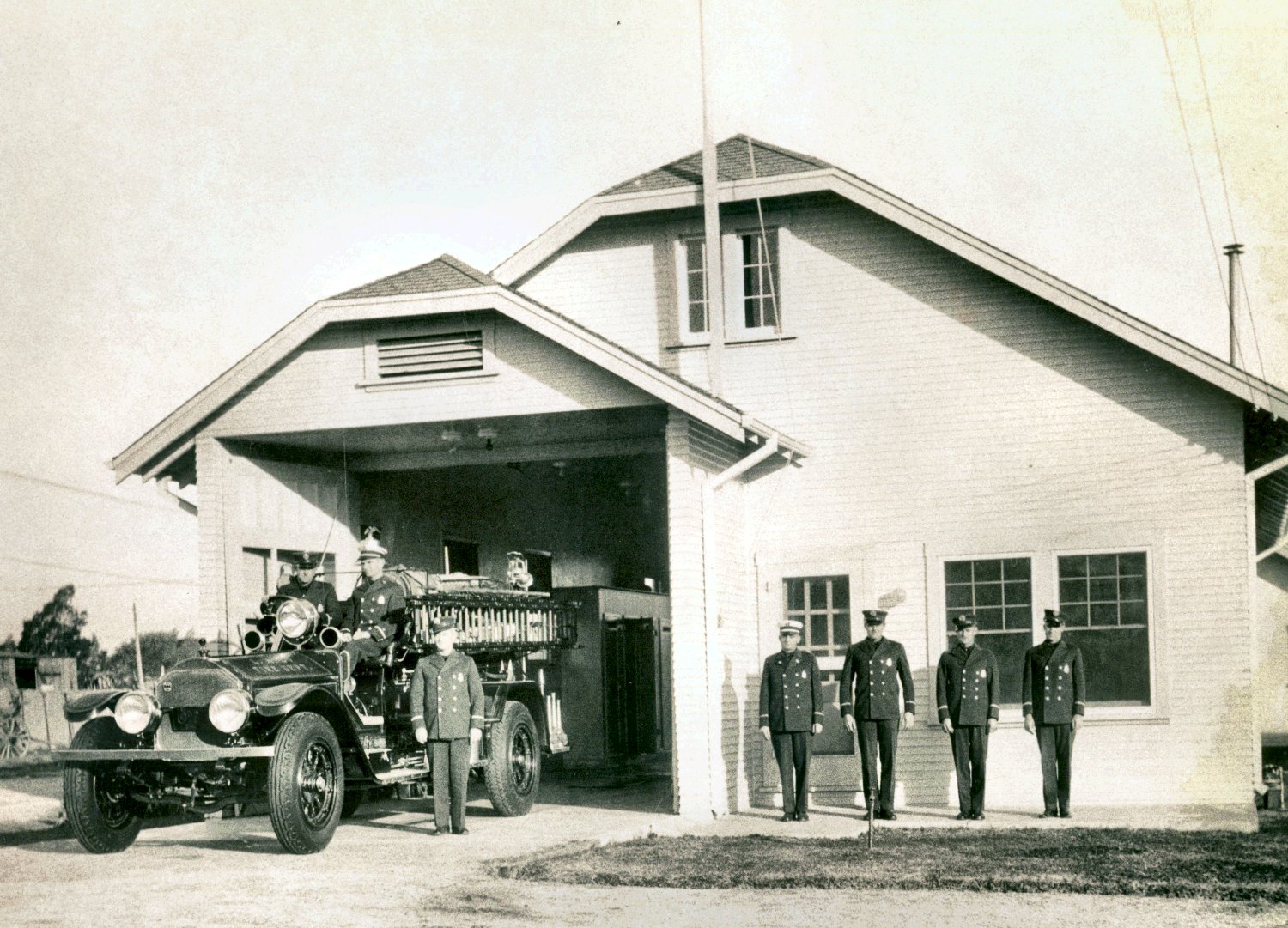
Engine Company No. 14 |
|||||||||
|
|
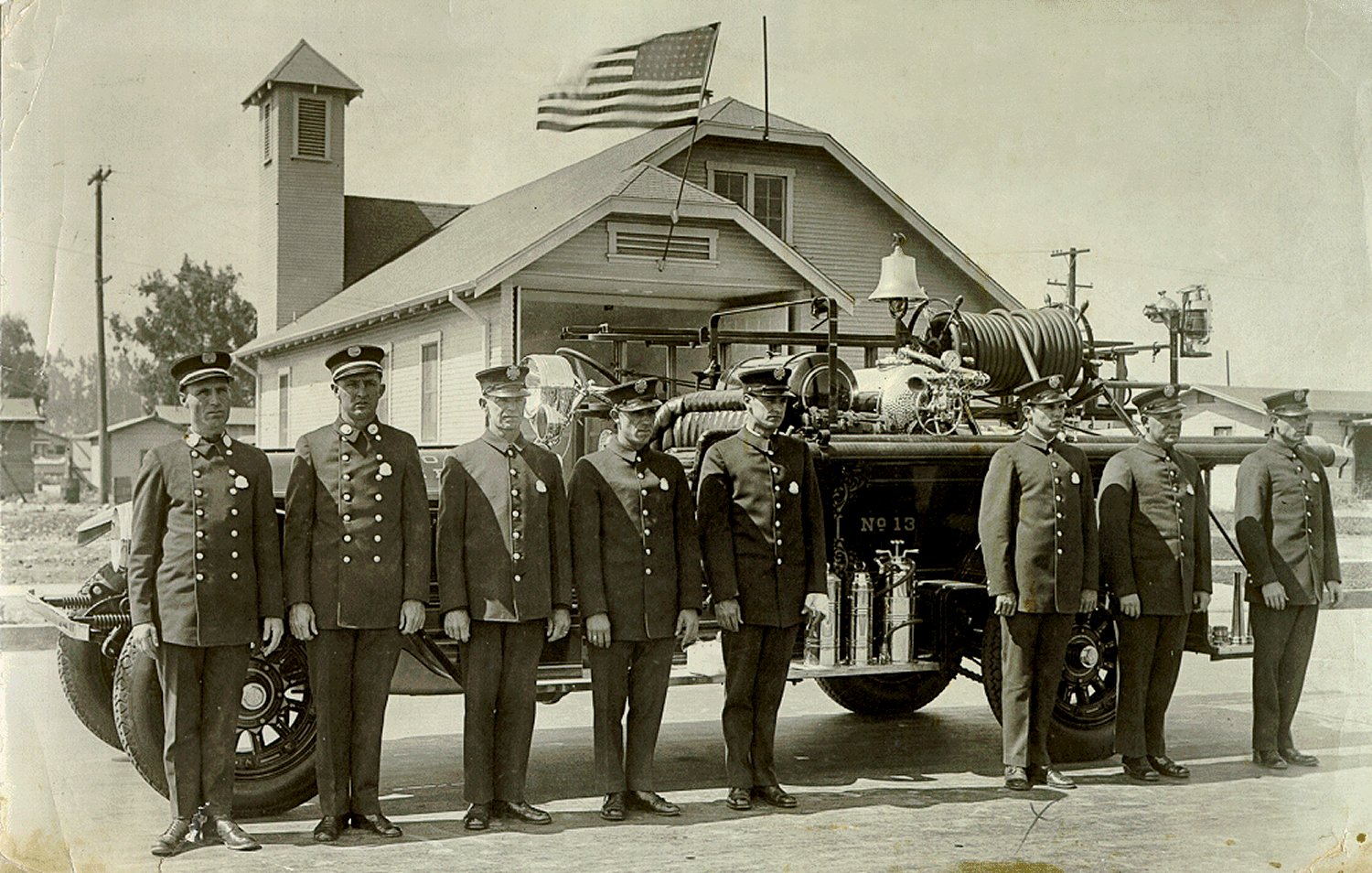
Engine Company No. 13
|
||||||||
|
Building constructed by Captain T. F. Schneider, L.A.Co. F.D. |
LAFIRE.COM
Fire Station 64 Photo Gallery
|
The Companies |
The Fire Houses |
||
| LACO
Engine Company No. 13 (Green Meadows Fire Protection Dist.) LAFD Engine Company No. 64 . . Truck Company No. 64 in service TASKFORCE 64, RA64, RA864 |
12/29/1924 |
118
West 108th Street (LACO) |
12/29/1924 |
Los Angeles County Fire Department
Engine Company No. 14 and Engine Company No. 13
1924 to 1926
|
Engine Company No. 14 |
|||||||||
|
|
Engine Company No. 13
|
||||||||
|
Building constructed by Captain T. F. Schneider, L.A.Co. F.D. |
|
In
August 1923, the County Fire District Act became effective
authorizing the formation of 32 fire districts in the
unincorporated territories of Los Angeles County.
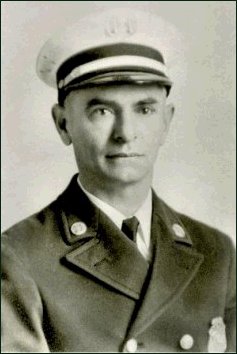
Theodore (Ted) Fredric
Schneider, a Callman for the Los Angeles Fire Department,
was hired by the County and was appointed Fire
Captain June 16, 1924. He was instrumental in forming three of
these districts; the Howard Fire Protection District; Engine 14,
on Century at Normandie, the Green Meadows District; Engine 13, at
108th Street and Main Street, both in 1924 and later,
in 1938, the Angeles Vista District (Baldwin Hills); Fire Station
38. This station is still in use. Originally, Engine 14 went into service in a rented storefront on Normandy at 105th Street. Its “First-In” district, eight miles south of Los Angeles City Hall and just north of Gardena, was bounded by 88th Street on the north, Vermont Ave. on the east and El Segundo on the south. On the west the district border followed Halldale Ave. south from 88th Street, turning west on 92nd Street to Denker Ave., and south to Century Blvd. It then turned west again to Western Ave. and finally, south to El Segundo. The district included an area known as Athens. Originally intended to be an upscale residential suburb similar to Beverly Hills and Bel Air, some of the large homes still remain, Athens quickly became a mixed community dominated by the oil industry. Oil had been discovered in Los Angeles in 1892 and by 1923 was the world’s fourth largest supplier. Athens was littered with drilling derricks, oil pumps storage tanks, sumps and pumping facilities. Engine 13 went into service in a rented garage located on Main Street at 108th Street. Century Blvd. bound its district on the north, Central Ave. on the east, El Segundo Blvd. on the south and Figueroa Street on the West. Both companies went into service with new 1924 Type 75, American La France 750 GPM Triple apparatus. The firemen called them “Frogs”. Both
companies went into service under the “Single-Platoon” system.
This was the common work schedule for most departments and
required members to work six days a week with one day off. Each
was given time off in the afternoon for lunch and evenings for
dinner and most of the men would go home for their meals. Soon
after opening, Ted hired enough men to incorporate a “Two-Platoon”
|
|
system which allowed members to work a 24-hour on, 24-hour off schedule. Ted’s Two-Platoon System may have been one of the first such work schedules to go into effect in the Los Angeles area. Although the Los Angeles Fire Department instituted a Two-Platoon system in late 1915, it was a split shift 10-hour/14 hour schedule. The 24-hour on/off system didn’t go into effect until September 1929. Although his fire station operated on the Two-Platoon system, the County only authorized one Captain per district. Ted appointed an acting captain in his absence. When an alarm came in on Ted’s day-off, he could pick up the phone in his house and listen to the caller. If there was a report of fire, the company, under the command of an acting captain, would respond and Ted would also respond from his home in his personal automobile, complete with a red light on the front and a B&M siren under the hood. Many a family outing turned into an emergency run across town as Ted headed towards a column of smoke. On March 18, 1926 the City of
Los Angeles annexed the Green Meadows district and Fire Station 13
became LAFD Engine Company No. 64. (The current Fire Station 64,
as well as the new station currently under construction, is on the
same site.) Each District had its own Fire Commission made up of citizens residing in the District. Because operating budgets were extremely tight, the captain of each district served as the de facto “Fire Chief”. They formulated the budget, hired personnel and purchased equipment including fire apparatus. Fire Station 14 was where Ted
would spend his entire career. |
|
The 1929 stock market crash pushed the nation into an economic depression. The life of a fireman during the depression years consisted of long hours of work and little compensation. Some departments reduced salaries rather than layoff members. Many duties, including fire prevention inspections, hydrant testing and hydrating painting were preformed without compensation and on their days off. Ted, an electrician and telephone lineman by trade, had gone to school to study the “Gamewell Alarm System”. He installed new alarm systems or repaired existing ones on his days off, often taking his son Larry with him as he traveled to various fire stations. During extreme weather conditions, such as when the Santa Ana Winds blew, all of the firemen would return to the station to increase manpower. All of this work was done without compensation and interestingly, with few complaints. Ted knew many apparatus representatives including the Hurst brothers, the Pacific Coast representatives for the Seagrave Corporation, Roy Hardy of the Crown Coach Company in Los Angeles and also the representatives of the La France, Mack and General Pacific Companies. Roy Hardy often approached Ted for advice in the development and construction of the first Crown prototype; a 1000 GPM Triple with a Waterous 2-stage centrifugal pump and a Roi-Line V8 engine. It was Ted who convinced Hardy to change to the Hall Scott engine. This line of apparatus soon became one of the most popular and successful fire apparatus in the country. Roy Hardy later joined the Seagrave Corporation and in 1960 developed their first cab-ahead type apparatus. Ted also worked directly with the numerous water companies that provided service to the community. Some of these water companies were very small serving only a few blocks. Ted became an expert on water systems and installed many fire hydrants himself. He often knew more about fire hydrant installation than the water company employees themselves. Ted was on the original Rules
and Regulations Committee. He also worked for the CSFA throughout
his career and participated on almost every committee. He and
Adelaide handled the 22,000 memberships for over 15 years. |
LAFIRE.COM
Copyright 2008 All Rights Reserved.